

















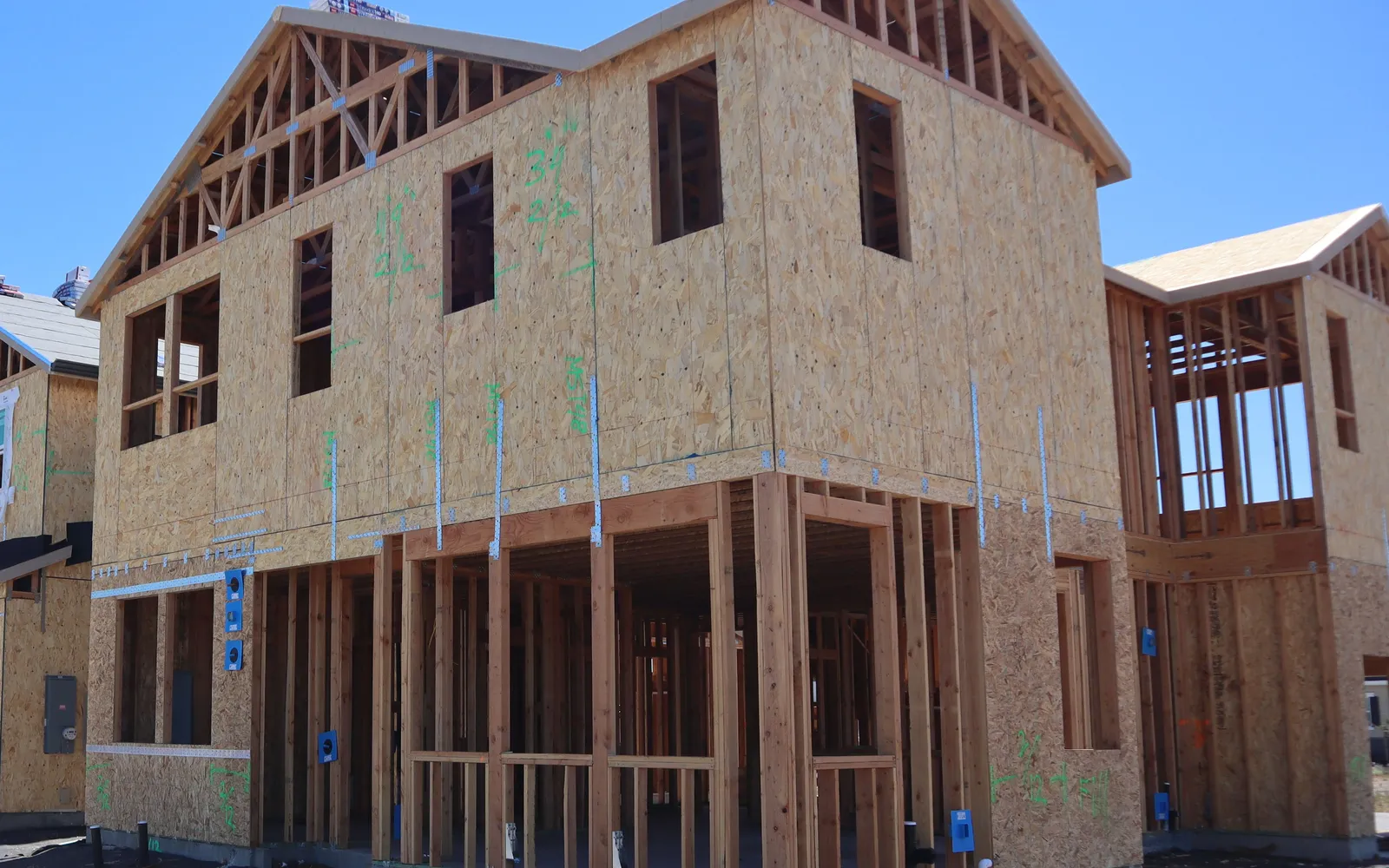
If you’re a middle-income Californian hoping to buy a newly built home, a measure on the ballot counties start mailing this week could put you in one with 3% down. Read the loan part twice.
Prop 37 would let the California Housing Finance Agency sell up to $25 billion in bonds and lend buyers up to 17% of a new home’s price. Your 3% plus the state’s 17% makes 20% down, which SPUR notes is enough to skip private mortgage insurance.
The pitch and the paperwork
The official ballot argument promises “Zero Taxpayer Cost” and “No Taxpayer Risk.” The Legislative Analyst agrees there are no direct state or local costs.
Here’s why. You’re the one paying.
The 17% isn’t a grant. It’s a fixed-rate second mortgage, and the proposed law says its rate and payment schedule must be set, as far as possible, at levels that repay the bondholders and cover the agency’s administration. CalMatters describes repayment as “monthly installments.” The California Budget and Policy Center puts it plainly: “The interest rate cannot be known before voters decide on Prop. 37.”
So it’s a loan with a blank where the price should be.
The rules are tight. The home must be newly built (or a converted commercial building), and you must be its first buyer. Your household income can’t top 200% of the area median, and the price can’t top 125% of the county’s conforming loan limit. In San Francisco, SPUR puts that cap at $1,561,406. Your 3% has to be your own money, not a grant or another loan.
What it costs you
CalMatters uses an $800,000 home. Your 3% is $24,000. The state’s 17% is $136,000.
Since the rate isn’t set, here’s our math on a 30-year schedule. At 5%, that second loan runs about $730 a month. At 6%, about $815. At 7%, about $905. Every point on the rate is roughly $85 a month, on top of your first mortgage.
The measure does help you in a few places. Rates must be fixed. Prepayment penalties are banned. The lender’s origination fee is capped at 0.5% or $290, whichever is greater.
Then there’s the builder trade. Builders who opt into Prop 37’s “qualified builder” track meet higher labor standards. In exchange, homes they build get altered defect-claim rules: the builder can contact you directly during a dispute and can ask you to sign a release covering a defect once it’s repaired to your satisfaction. You get a written disclosure before closing. Read it.
Do this
If you’re registered, vote. Counties must start mailing ballots by October 5, and the registration deadline is October 19.
If you’re house-hunting, don’t stall a purchase waiting on this. The measure gives CalHFA up to a year after it takes effect to launch the program, and the rate stays unknown until then.
Run the second-loan payment through our mortgage calculator at a few rates. Then compare the total against what you’d pay with a regular low-down-payment loan. Our first-time buyer picks and down payment guide cover the options you can use today.
Prop 37 might be a good deal. You just can’t know until the state names the rate.
How Candid Yak makes money. Some of the products we write about pay us if you apply or sign up through our links. That never changes our verdict, our rankings, or the numbers in this article. We call a bad deal a bad deal whether it pays us or not. Some brands shown in our comparison tools are placeholder examples while we finalize partner agreements, and we label them as such.
Sources
- Proposition 37 analysis (California Legislative Analyst's Office, November 3, 2026 ballot)
- Proposition 37, text of proposed laws (California Secretary of State Official Voter Information Guide)
- Proposition 37 (California Official Voter Information Guide)
- Will Prop. 37 Make Homeownership More Affordable? It's Not Guaranteed (California Budget and Policy Center, August 2026)
- California Prop 37: Homeowner Loans (SPUR Voter Guide)
- Proposition 37: Homebuyers loan (CalMatters Voter Guide 2026)
- Key dates and deadlines, November 3, 2026 general election (California Secretary of State)