















Ranking
Best High-Yield Savings Accounts
Top APYs with low fees and easy access.
| Rank | Company | Best for | Key stat | Score | Apply |
|---|---|---|---|---|---|
| 1 | AllyOnline Savings | Best for savings tools | 3.10% APY (September 2026, variable) | 9.1/10 | |
| 2 | Marcus by Goldman SachsMarcus Online Savings | Best for simplicity | 3.50% APY (September 2026, variable) | 9/10 | |
| 3 | SoFiChecking and Savings | Best combined checking and savings | 3.30% APY with direct deposit (September 2026, variable) | 9/10 | |
| 4 | 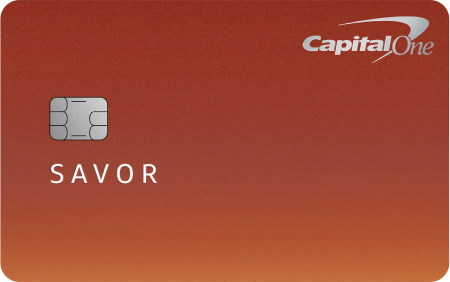 Capital One360 Performance Savings | Best from a big bank | 3.10% APY (September 2026, variable) | 8.8/10 | |
| 5 | American ExpressHigh Yield Savings | Best for existing Amex customers | 3.10% APY (September 2026, variable) | 8.6/10 |
What Makes a Savings Account High-Yield
A high-yield savings account (HYSA) is a federally insured deposit account that pays a much higher APY than the national average. The national average savings account rate tracked by the FDIC has historically been well below 1% at the big traditional banks. High-yield accounts have paid multiples of that, especially since 2022 when the Federal Reserve started raising the federal funds rate aggressively. Translation: most of America is sitting on cash earning 0.01% while a parallel account at the same bank's competitor pays 4.75%.
The structural reason online banks and credit unions can pay higher rates is lower overhead. No branches to keep the lights on in. They pass the savings to depositors as higher interest. This is not a promo trick. It is a permanent competitive advantage that has held through multiple rate cycles.
High-yield savings accounts are FDIC-insured (at banks) or NCUA-insured (at credit unions) up to $250,000 per depositor per institution per ownership category. As safe as any deposit account at a major bank. The main risk is rate variability. The rate is not fixed, so it will drop when the Federal Reserve cuts rates.
Top Accounts to Consider
Marcus by Goldman Sachs is one of the most consistently competitive high-yield savings accounts on the market. Competitive APYs, no minimum balance, no monthly fees, simple online interface. Marcus is a division of Goldman Sachs Bank USA, FDIC-insured.
Ally Bank's Online Savings Account has been a benchmark high-yield savings account since Ally launched as an online bank. It consistently pays near the top of the market range with no minimum balance, no fees, and strong mobile tools. Ally also offers a savings bucket feature that lets you sort savings into labeled sub-categories inside a single account.
American Express High Yield Savings Account offers competitive rates from one of the most recognized financial brands in the world. No minimum balance, no monthly fees, and you can link up to five external bank accounts for transfers.
Capital One 360 Performance Savings is notable for combining a competitive APY with access to Capital One's physical branches and cafe locations, an unusual combination for a high-yield savings account. No fees, no minimum balance.
What Matters Past the APY
The rate is the headline. Secondary features matter for daily usability. Check transfer speed. Some accounts offer same-day ACH or Real-Time Payments (RTP) transfers. Others take two business days. For an emergency fund, faster access counts.
Mobile app quality is uneven. Ally and Marcus consistently earn high marks. Capital One's app benefits from a bigger investment budget given its larger customer base.
Check the bank's rate history. How fast did it pass Fed rate increases to depositors? How fast did it cut when the Fed was easing? Banks that lag on the way up and snap on the way down are the bank's bet. Banks that move symmetrically are the ones worth your cash.
How Much to Keep in a High-Yield Savings Account
The right number depends on your situation. Most financial advisors recommend three to six months of essential expenses in liquid savings as an emergency fund. Past that, additional savings you will need within one to three years (down payment, car purchase, wedding) belong in a savings account or short-term CDs.
Money you will not need for more than three to five years usually belongs in a diversified investment portfolio, not savings. Long-term investment returns have historically beaten savings rates by a wide margin. Savings is for near-term, liquid needs. Investing is for long-term wealth building. Different jobs.