













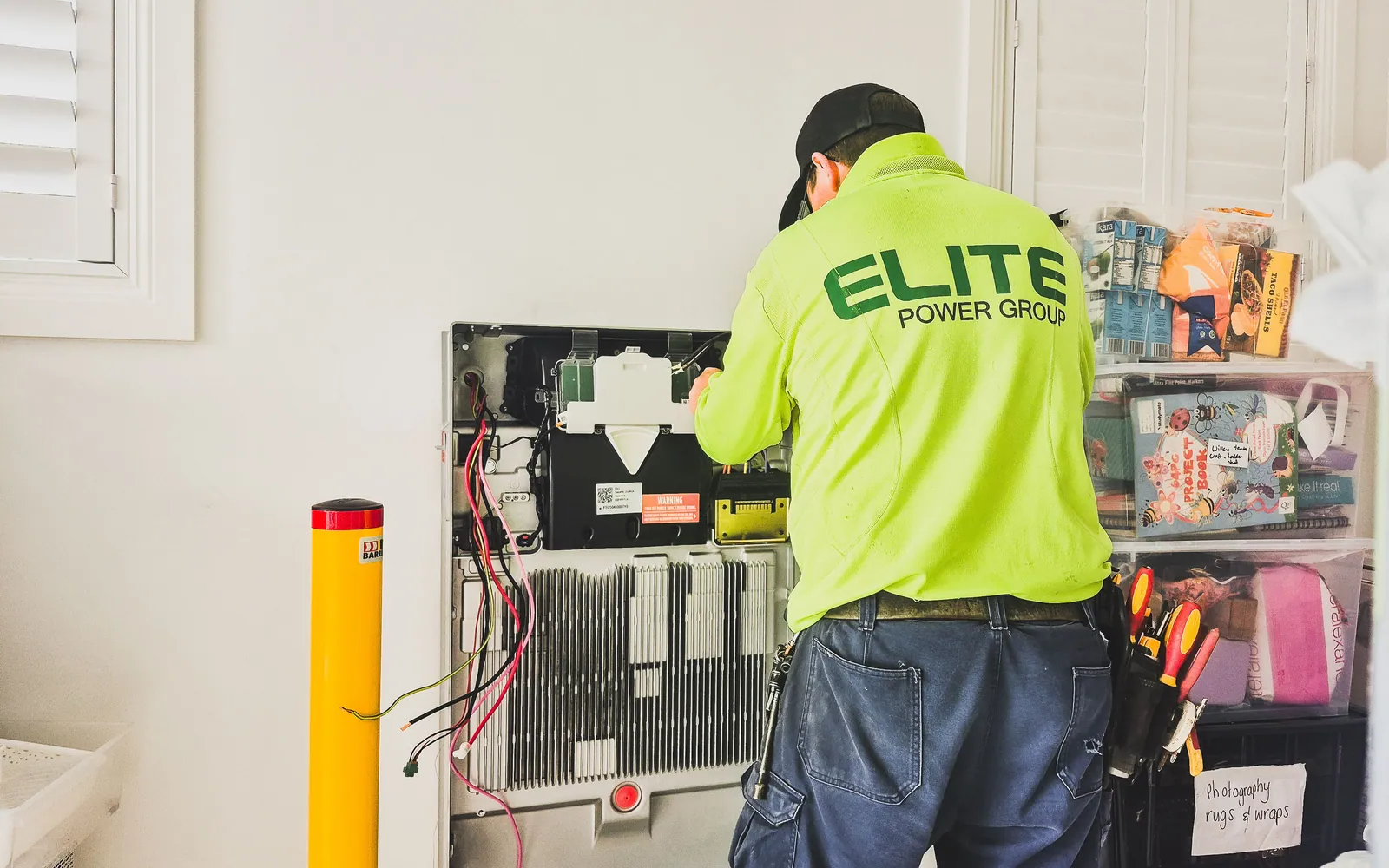
What Home Battery Storage Does
A home battery storage system stores electricity from your solar panels (or the grid) and releases it on demand. The main use cases are backup power during grid outages, shifting self-generated solar electricity from daytime production to evening use, and financial arbitrage in areas with time-of-use pricing where grid power costs vary by time of day.
Without battery storage, a grid-tied solar system automatically shuts down during power outages to protect utility workers on the lines. With battery storage, your home can keep running on stored solar power even when the grid is down. That backup capability is the most commonly cited reason homeowners add storage, especially in areas hit by severe weather, wildfires, or aging grid infrastructure.
The financial case for battery storage leans heavily on your electricity rate structure, net metering policy, local grid reliability, and whether the federal 30% tax credit applies to your installation.
The Main Home Battery Products
Tesla Powerwall 3 is the most recognized home battery brand. A single unit stores 13.5 kWh of usable energy, has a 10-year warranty, and includes an integrated backup gateway for automatic outage switching. It works with solar from any manufacturer and provides whole-home backup for essential circuits.
Enphase IQ Battery systems (available in 3.5 kWh and 10 kWh configurations) use microinverter-based architecture and tie cleanly into Enphase solar systems. The modular design lets you add capacity over time. Enphase batteries are popular with homeowners who already have Enphase solar systems.
SunPower SunVault, Franklin Electric Apower, and LG RESU Prime are additional options through specific installers. The market has widened, and competitive installation quotes should include at least two to three battery options.
When Battery Storage Is Worth It
Battery storage delivers clear financial value in specific scenarios. In areas with time-of-use electricity pricing (common in California, New York, and Hawaii), batteries let you store solar electricity generated during cheap daytime hours and use it during expensive evening peak hours, dodging peak rates that can hit $0.40 per kWh or more.
In areas where net metering has been cut or eliminated, where utilities pay less for exported solar power than they charge for grid power, batteries let you use more of your own solar production instead of sending it to the grid at a lousy rate. That self-consumption play can meaningfully improve the financial return on a solar installation in states with weak net metering policies.
For homeowners who hit frequent or extended outages (in wildfire-prone areas, hurricane zones, or areas with aging grid infrastructure), the insurance value of battery backup justifies the cost independent of financial returns. The value of having power during a four-day outage, for medical equipment, food preservation, security systems, and general safety, is real and hard to quantify in dollars.
When Battery Storage Is Not Worth It
For homeowners in areas with favorable one-for-one net metering, stable grid power, flat-rate electricity pricing, and low outage frequency, the financial return on battery storage alone may not justify the $10,000 to $25,000 cost within a reasonable payback horizon.
In those situations, batteries are mostly a premium convenience and resilience feature, not a financial optimization. That is not a reason to skip storage if you value the backup capability. Just a realistic framing of what you are paying for.
The 30% federal tax credit sharpens the storage economics. A $12,000 battery at full price is a different calculation than the same battery at a $8,400 net cost after the credit. Always run the post-credit cost when sizing up battery storage economics.