














Texas solar at a glance
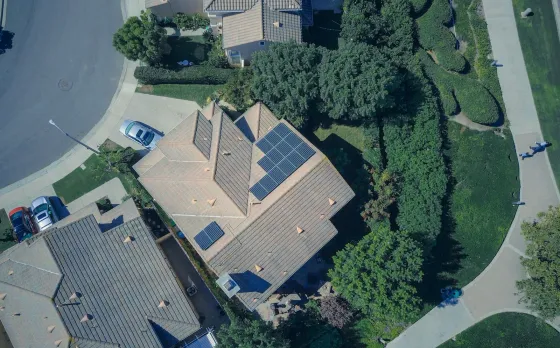
A typical Texas home with a 7.2 kW system pays it off in 9.4 years and saves $38,400 over the panels’ lifetime. Here are the installers we’d actually quote, and the incentives most owners miss.
| Metric | Value | Context |
|---|---|---|
| Avg sun hours | 5.3 hr/day | up 18% vs national |
| Avg installed cost | $2.51 /watt | down 8% vs national |
| Avg system size | 7.2 kW | $18,072 before incentives |
| Federal ITC | 30% | Through 2032 · IRA |
| Avg payback | 9.4 yrs | down 2.1 yrs vs national |
The installers we’d actually quote first in Texas
Refreshed May 2026 · Sample: 7.2 kW system · single-family home
| Installer | Cost per watt | Warranty | Panel type | Financing |
|---|---|---|---|---|
| Freedom Solar (Editor’s pick) | $2.38/watt installed | 25 yr | SunPower Maxeon | Cash, Loan, Lease, PPA |
| Sunrun (Best for lease/PPA) | $2.62/watt installed | 25 yr | LONGi · Q Cells | Lease, PPA, Loan |
| Palmetto Solar (Best for monitoring) | $2.49/watt installed | 25 yr panel · 10 yr labor | Q Cells Q.Peak | Cash, Loan, Lease |
| Momentum Solar (Best for $0 down) | $2.71/watt installed | 25 yr | Trina · Hanwha | $0 down, Lease, PPA |
| Longhorn Solar (TX local · Austin HQ) | $2.42/watt installed | 25 yr panel · 10 yr roof | REC Alpha · LG | Cash, Loan |
| Sunpro Solar (Largest TX footprint) | $2.55/watt installed | 25 yr | Silfab · LONGi | Cash, Loan, Lease |
Source: EnergySage 2026 Q1 Texas installer index, net of advertised TX local-utility rebates.
National installer footprints changed fast between 2024 and 2026, several big names exited the market entirely. Verify any installer actively serves Texas and holds a current state contractor license before signing anything.
The incentives a Texas solar buyer can actually stack
Federal Investment Tax Credit
Federal · stacks with state and local
The 30% ITC on the system’s installed cost. Non-refundable but carries forward. Pairs with battery storage.
- Solar PV credit: 30%. Applied to total installed cost on IRS Form 5695.
- Battery storage credit: 30%. Standalone batteries qualify, since Aug 2022.
- Sunset schedule: 2032 · full rate. Steps down to 26% in 2033, 22% in 2034, sunset 2035.
- Carry forward: Unlimited. Unused credit rolls to following tax year(s).
Average TX household savings: $5,420.
State-level: nothing, almost
State · Texas-specific
Texas has no statewide solar tax credit. Its incentives operate through property-tax exemption and utility-level buyback programs.
- Property-tax exemption: 100%. 100% exemption on the assessed value added by solar, permanent.
- State income tax: N/A. Texas has no state income tax, so no state credit applies.
- SREC market: None. No Texas REC market for residential solar.
- Sales tax on equipment: Exempt. Solar equipment is exempt from TX sales tax.
Property-tax savings vary by appraisal district.
Net metering and utility buyback
Utility · the actual cash mover
Texas’s deregulated grid means buyback rates vary by retail provider, not state. The provider you pick matters as much as the installer you pick.
- Statewide net metering mandate: No mandate. Texas does not mandate net metering at the state level.
- Best buyback plans (ERCOT area): 1:1 credit. Rhythm, Octopus, Chariot offer full retail credit.
- Austin Energy Value of Solar tariff: $0.097/kWh. Tiered $/kWh credit, recalculated annually.
- CPS Energy net-billing (San Antonio): 1:1 credit. Credit at full retail; rolls over monthly.
Switch your retail provider before installing.
Local utility rebates (where they exist)
Local · municipal rebates
A handful of TX municipal utilities still offer flat-dollar rebates. Most expire when their annual budget is exhausted.
- Austin Energy: $2,500. Solar PV rebate, capped at $2,500.
- CPS Energy (San Antonio): $4,800. $0.60/W rebate, up to $4,800.
- Garland Power and Light: $3,500. $0.50/W, cap $3,500.
- Oncor / TXU / Reliant: None. No flat rebate; rely on buyback.
Budgets reset Jan 1, queue runs out by Q3 in most cities.
For the full federal credit rules and how to claim them, see our solar tax credits guide.
The five factors that change your Texas payback most
- Roof orientation and pitch (highest impact). A south-facing 25-35 degree roof in Texas produces 18-24% more annual kWh than the same array on a flat or north-facing roof. The biggest single variable in your payback math.
- Utility and buyback plan (high impact). A 1:1 buyback plan beats a wholesale-only plan by approximately $680/yr on an average Texas home. Pick the retail provider before you sign with the installer.
- System size vs. consumption (high impact). Oversizing in Texas hurts payback unless you have battery storage. Without 1:1 net metering everywhere, every exported kWh is worth less than every consumed kWh.
- Roof age and type (medium impact). An asphalt-shingle roof over 12 years old usually wants replacing first, adding $8-15k to your project but folding into the same ITC year. Metal and tile roofs cost more to install on.
- Financing structure (medium impact). Cash purchase has the best payback (9.4 yrs). A solar loan adds 2-3 years. A 20-year lease/PPA never owns the system but starts saving in month 1.
- Battery storage (moderate impact). In ERCOT, batteries earn their keep through peak-shaving and outage resilience more than buyback arbitrage. Adds $11-14k to a project; cuts payback by 1.5 yrs if you have time-of-use pricing.
To model these factors against your own roof and rates, start with our solar ROI guide.
Is solar worth it in Texas? Almost always, with one caveat
The Texas economics are unusually good
Texas has the second-most sun hours of any state, the lowest installed cost-per-watt outside Arizona, and a 100% property-tax exemption on the value solar adds to a home. The federal ITC works the same as everywhere else: 30% off the installed cost. Stack those and the payback math is faster than most northern states even without a state credit.
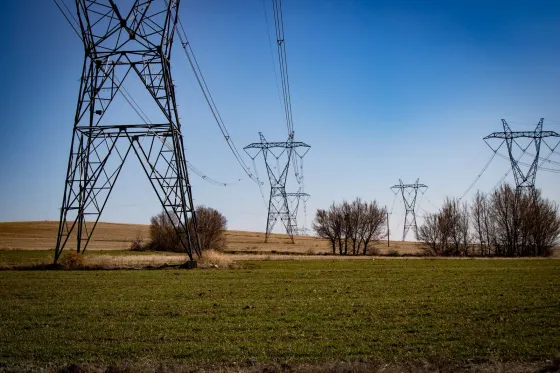
The caveat is the grid. Texas runs on ERCOT, which is deregulated. That means there’s no single statewide net-metering rule. Your retail electric provider sets the buyback rate, and they vary wildly. We’ve seen Rhythm and Octopus offering 1:1 credit while a neighboring TXU plan offers wholesale-only at 4 cents/kWh. Same house, same panels, $680/yr difference.
Pick your retail provider before your installer
The single highest-leverage decision a Texas solar buyer can make is which retail provider’s plan they enroll on before the system is commissioned. Switching mid-cycle is allowed but resets your meter, and most installers will not advise on this because the choice doesn’t affect their margin. We always quote it.
Buy it; don’t lease it, if you can use the ITC
The 30% ITC is non-refundable but carries forward. So anyone with federal tax liability above the ITC amount in any of the next several years can claim the full credit. That makes cash purchase or a solar loan strictly better than a lease/PPA if you have the tax liability. Retirees, low-income households, and renters can still benefit through leases.
One number worth checking: the cost of doing nothing
An average Texas home pays about $2,160/year in electricity. Over the 25-year warranty period of a typical system, that’s $54,000 at zero inflation. Even a slightly overpriced solar install pays for itself well inside that window. The real question isn’t whether to go solar, it’s which installer and which retail plan.
Weighing cash, loan, lease, or PPA? Our solar financing guide compares all four paths.
Sources
- DSIRE: Database of State Incentives for Renewables and Efficiency
- ERCOT, Texas grid operator and retail provider data
- EnergySage Texas solar cost and installer benchmark, 2026 Q1
- IRS Form 5695, Residential Energy Credits
- U.S. Energy Information Administration: Texas state energy profile
- DOE Homeowner's Guide to the Federal Tax Credit for Solar Photovoltaics