

















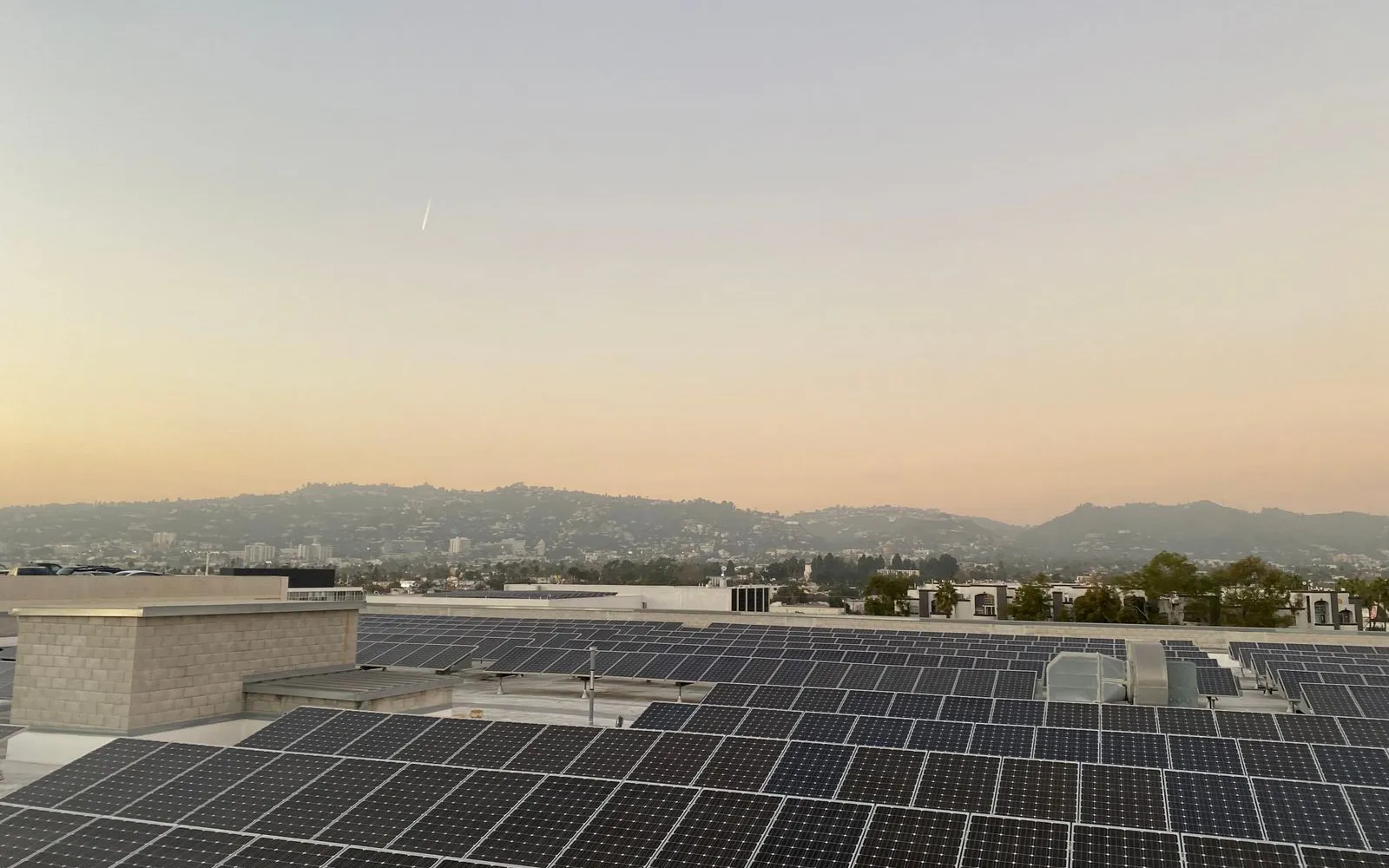
If you have solar panels and no battery, a wildfire power shutoff leaves you exactly as dark as your neighbor without panels. Sun out, roof full of glass, nothing coming out of the outlets.
If you do have a battery, the risk is quieter. It may be set to spend most of its charge saving you money on your bill, not keeping your fridge cold.
Why the panels go dark
This surprises a lot of owners, so here it is straight from the U.S. Department of Energy: rooftop systems are “designed to switch off if the grid power cuts out.” The reason is safety. Crews working on a line that’s supposed to be dead can’t have your roof feeding power back into it.
To run on their own, the DOE says, panels need “a properly configured inverter and a storage system.” Translation: a battery. Your solar salesperson may have mentioned this. Possibly in a lower voice.
And shutoffs aren’t hypothetical in California. PG&E cut power to about 9,500 customers across eight counties on Saturday, September 12, warned that up to 14,000 could be affected, and shut off roughly 2,500 more early that Monday before restoring essentially everyone by 7 p.m. PG&E called a July event its third of the year. Fall wind season isn’t over.
Here’s the catch with the battery
PG&E’s own battery page lays out how it goes wrong. In “bill savings” mode, the battery uses stored power during expensive hours. If you’re in a utility or third-party battery program, it may “send stored energy to the grid during program events.” And it names the failure plainly: with a “low backup reserve setting,” less energy “may be saved for outages.”
So picture it. Your battery spends the evening covering peak-rate hours, the way it’s supposed to. The shutoff hits at 10 p.m. The sun won’t recharge anything until morning, and PG&E notes that at night or on cloudy days, panels “may not be able to recharge the battery during an outage.”
Your backup is whatever reserve percentage you picked during setup and never touched again.
The window you get
PG&E’s shutoff guide says it aims to notify you 48 to 24 hours before the power goes off, then again 1 to 4 hours before. Its stated goal is restoration within 24 hours after the dangerous weather passes, and crews have to patrol the lines before they turn anything back on.
That warning text is your cue. The bill savings you give up for a day are small. A day without a fridge or a well pump costs a lot more.
Do this now
Open your battery app today, not during the next warning. Find the backup reserve setting and write down what it says.
When a shutoff watch arrives, raise that reserve. PG&E’s guidance says some owners do exactly this before wildfire season, and also check which circuits are actually backed up. PG&E warns your battery may only power selected parts of the house. Find out now whether the fridge is one of them.
If you’re enrolled in a battery program that pays you for grid events, read its terms for how to opt out of an event. We’ve covered how those programs pay.
No battery? Check your address on PG&E’s Wildfire Safety Progress Map. If you’re in a high fire-threat area or on an Enhanced Power Safety Settings circuit, PG&E’s rebate pays up to $300 toward a portable generator or battery, plus up to $200 more for CARE or FERA customers. Apply by December 31, 2026. The battery must hold between 290 and 1,000 Wh, and PG&E means it: a 1,024 Wh unit doesn’t qualify.
Pricing a full home battery instead? Start with our battery storage guide and run the payback in the solar calculator before anyone quotes you.
The detail
Shutoffs are PG&E’s term, Public Safety Power Shutoff, and other California utilities run their own. The DOE explanation of why grid-tied panels go dark applies everywhere. The rebate figures and eligibility rules come from PG&E’s program page as of October 6, 2026.
How Candid Yak makes money. Some of the products we write about pay us if you apply or sign up through our links. That never changes our verdict, our rankings, or the numbers in this article. We call a bad deal a bad deal whether it pays us or not. Some brands shown in our comparison tools are placeholder examples while we finalize partner agreements, and we label them as such.
Sources
- Solar and Resilience Basics (U.S. Department of Energy)
- Residential Battery Storage (PG&E)
- Generator & Battery Rebate Program (PG&E)
- Your guide to Public Safety Power Shutoffs (PG&E, November 2025)
- PSPS Update: Essentially All Customers Restored from Today's Event (PG&E Currents, September 11 to 14, 2026)
- PG&E Monitoring High Wind Event, Is Preparing for Possible Public Safety Power Shutoff for Portions of 10 Counties (PG&E, July 14, 2026)