

















Update, October 1, 2026: We read the settlement agreement itself. The surcharge cap is 3% or the merchant’s actual card cost, whichever is lower, not the 4% we first reported. The agreement also names which card tiers count as premium, so we added those below. In September, nearly 1,000 merchants and trade groups asked the judge to reject the deal, and final approval is still pending.
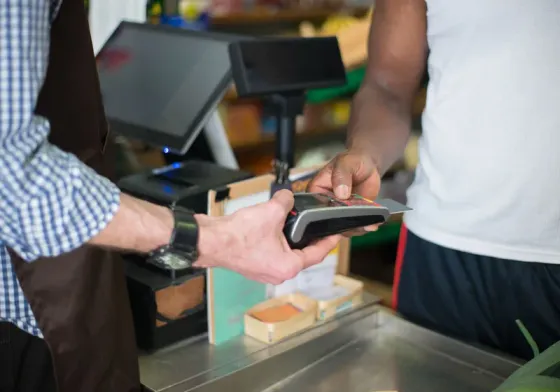
If you pull out a premium rewards card at checkout, a store may eventually be allowed to add a surcharge or hand it back and ask for a different card. That isn’t happening yet. But the rule that forces every merchant to take every card at the same price is on its way out.
On June 9, a federal judge in Brooklyn gave preliminary approval to a revised Visa and Mastercard settlement with merchants. Final approval is a separate step. In September, a coalition of 978 merchants and trade groups filed objections asking Judge Brian Cogan to reject it. He hasn’t ruled.
Two things change if it goes through. First, the swipe fee merchants pay drops. Standard consumer credit card interchange, the fee the store pays when you tap, would be capped at 1.25% for eight years, and the average would come down 0.1 percentage point for five years. Nothing requires stores to pass any of that on to you.
Second, and this is the part you’ll feel: merchants could surcharge premium cards or refuse them. The old “Honor All Cards” rule says a store that takes any Visa takes every Visa. Under the agreement, Visa has 90 days after approval to let merchants pick categories: debit, commercial, standard credit, premium credit.
Here’s what they don’t tell you. “Premium” isn’t about your annual fee. It’s the product tier. The agreement lists Visa Signature, Signature Preferred and Infinite, and Mastercard World, World High Value, World Legend and World Elite. Standard means Visa Traditional or Traditional Rewards and Mastercard Core or Enhanced Value.
The surcharge has a ceiling. A merchant can’t charge more than 3% or its own average cost of taking that card, whichever is lower, and it has to tell you at the register which cards it surcharges and by how much. The dollar amount has to print on your receipt. State surcharge laws still apply on top.
Will stores actually turn premium cards away? The objectors told the court rewards cards are more than 90% of credit card spending. A store that refuses them refuses most of its card customers. Surcharge signs at small shops are the likelier result.
Do the math. Say you spend $600 a month at small merchants on a card earning 2% back, and half of them add a 3% surcharge. On that $300 you pay $9 to earn $6. Bad trade.
Check your wallet this week. Find the tier name on each card. If it isn’t printed there, call the number on the back and ask. Know which of your cards is standard. A store that surcharges by tier can’t hit it with the premium fee. A store that surcharges every Visa credit card can, so read the sign.
Keep the premium card. Use it where it wins: big chains, online travel, anywhere with no surcharge notice. Pull out the standard card when the sign names your tier.
File this away until the judge rules. Nothing changes at your register this weekend, and our best credit cards list will still be here when it does. The move now is knowing which card goes with which store.
How Candid Yak makes money. Some of the products we write about pay us if you apply or sign up through our links. That never changes our verdict, our rankings, or the numbers in this article. We call a bad deal a bad deal whether it pays us or not. Some brands shown in our comparison tools are placeholder examples while we finalize partner agreements, and we label them as such.
Sources
- Superseding and Amended Rule 23(b)(2) Class Settlement Agreement, Exhibit 99.1 to Visa Inc. Form 8-K (SEC, November 10, 2025)
- Court approves Visa-Mastercard settlement (Payments Dive, June 9, 2026)
- Visa, Mastercard Settlement Faces Merchant Pushback In Court (Crowdfund Insider, September 19, 2026)
- Judge Signals Approval for Visa and Mastercard Swipe Fee Settlement (PYMNTS, June 2026)
- What the $38 billion Visa, Mastercard swipe fee settlement means for credit card users (Yahoo Finance)
- Visa, Mastercard $38 Billion Swipe Fee Settlement Wins US Judge's Approval (US News, June 9, 2026)